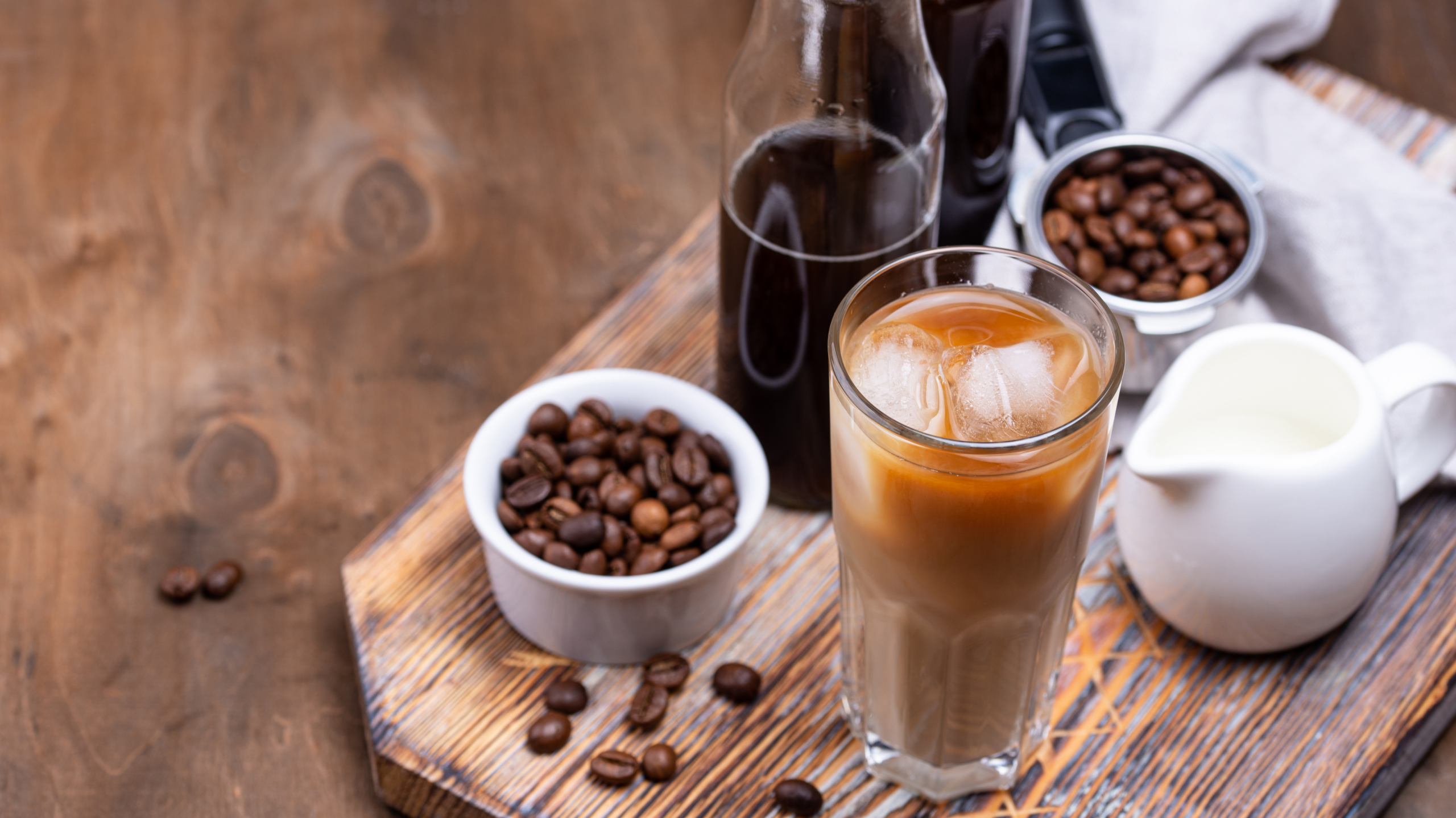
It’s hot out there (really hot). Which calls for something different — something cold, refreshing and still deeply satisfying. Enter the two reigning champions of warm-weather coffee: iced coffee and cold brew. Although they are both chilled and delicious, they are not the same.
What’s the Difference?
Iced Coffee: Hot Brew, Cold Finish
Iced coffee is exactly what it sounds like. Coffee that’s been brewed hot and then cooled down — either by chilling it or pouring it directly over ice. The defining characteristic is that heat is used in the brewing process, which means the full range of flavor compounds and acids are extracted, just as they would be in your regular morning cup.
Batch brew (double strength) is hot coffee that is brewed at double the normal coffee-to-water ratio, then poured over ice. The ice dilutes the concentrate back to a balanced strength. It’s fast, scalable and perfect for coffee shops that need to move volume quickly.
In contrast, Japanese flash brew is brewed hot — typically via pour-over — directly onto a measured amount of ice, which chills and dilutes the coffee instantly as it brews. The result is bright, crisp and remarkably vibrant. Since it’s made to order, flash brew stands apart from other iced coffee methods. The guest gets a fresh individual cup rather than something pre-batched. Admittedly this approach takes more time, but the payoff is a clarity of flavor that batch methods simply cannot replicate — and it gives both coffee shop guests and home brewers a chance to choose exactly which coffee they’re tasting.
Cold Brew: Time Over Temperature
Cold brew takes a fundamentally different approach. Instead of hot water, room temperature water is used. Instead of minutes, the coffee steeps for 12 to 24 hours. It does not require heat, just time, water and coffee.
This seemingly simple change has a profound effect on the final cup. Hot water extracts a wide spectrum of compounds from coffee grounds, including certain acids and bitter elements. Cold water, given enough time, extracts differently. Certain molecules simply don’t dissolve at lower temperatures. The result is a brew that’s naturally lower in acidity, with a smooth, clean, almost syrupy quality that many people find easier on the stomach and exceptionally easy to drink.
How to Spot the Difference on a Menu
It’s probably iced coffee if the menu says “iced coffee,” “flash brew” or “iced pour-over.” It may also be listed as “batch brew over ice.” Customers should expect a brighter, more acidic flavor profile — similar to hot coffee, just cold, often with some carbonic or bitter elements when ordering.
It’s probably cold brew if you see “cold brew,” “cold brew concentrate” or “nitro cold brew.” The flavor will be smoother, rounder and lower in acidity. These options are often served as a concentrate diluted with water or milk added.
In a specialty coffee setting, customers shouldn’t be afraid to ask. Any good barista will be happy to explain how a drink is made and what flavor profile to expect.
What Coffee Works Best?
For cold brew, coffees with chocolatey, nutty and caramel notes tend to shine. The slow extraction amplifies sweetness and body, and those flavors translate beautifully into a smooth, rich concentrate. You should think of medium to medium-dark roasts with cocoa, brown sugar or hazelnut descriptors.
That said, don’t overlook African coffees for cold brew — particularly Ethiopian or Kenyan beans. When brewed cold, these coffees can produce surprisingly juicy, fruit-forward results. Think blueberry, stone fruit and a tart lemon- or hibiscus-like zing. It’s a refreshing, almost juice-like experience that’s perfect for summer and a great way to showcase what cold brew can do beyond the expected chocolate forward profiles.
For flash brew and iced coffee, coffees with brightness and complexity tend to reward the method — lighter roasts, floral or citrus notes, anything that would also shine as a hot pour-over.
The difference ultimately comes down to temperature. Change the temperature, change the extraction and change the cup. No matter whether you prefer the bright clarity of a flash brew, the quick convenience of batch iced coffee or the silky smoothness of cold brew, there’s truly a cold coffee for every palate and every occasion.
Farmer Brothers has a wide range of coffee blends that make perfect options for cold brewing and iced coffee favorites. We’ve even streamlined the process with our new cold filter packs offered through our Sum>One Coffee Roasters specialty brand. Speak with a rep to learn more today.